
There are many reasons why you may need to remove one or many trees from your property. For example, your tree may be diseased, and you may want to prevent the spread of disease to other vegetation. The tree may be severely damaged from a bad storm, and you may need cut it down for safety reasons. You might even want to clear out a tree to put in a swimming pool or a play area for your kids. Unfortunately, removing a tree can be a risky endeavor that puts your safety and your home in jeopardy. Avoid making these common tree-removal safety mistakes.
Overlooking Power Lines
Some tree branches may have grown around power lines over the years. Others may have been placed too close to power lines. By chopping down branches or even the entire tree, there’s a chance that you could bring the power lines down, too. If this happens, you face the risk of fire or electrocution. If the tree in question is near a power line, have a professional remove it.
Trying to Do the Job Alne
Removing a tree is not a one-person job. You need at least one other person to hold the ladder while you are cutting higher branches. That person can also act as a spotter and help pull the branches and tree trunk away from the house as they fall. Never attempt to remove a tree by yourself, as you could face an increased risk of a mishap.
Improper Notch Sizing
The proper way to remove the main trunk is to make right-angle notches while keeping a hinge. The size of the notches allows you to control the direction in which the tree falls. The notches shouldn’t be too shallow or too deep because improper sizing can make the tree fall in an unexpected direction. To make a hinge, cut horizontally roughly 50%-75% through the tree, leaving a strip of wood that keeps the tree attached to the stump as it falls.
Failing to Create a Hinge
The hinge plays the critical role of preventing splintering up the trunk. Splintering can result in poor control over the direction the tree falls and can lead to kickback. In some cases, an untrained person can intend to create a hinge but lack the skill to complete this important step properly.
Cutting Too High
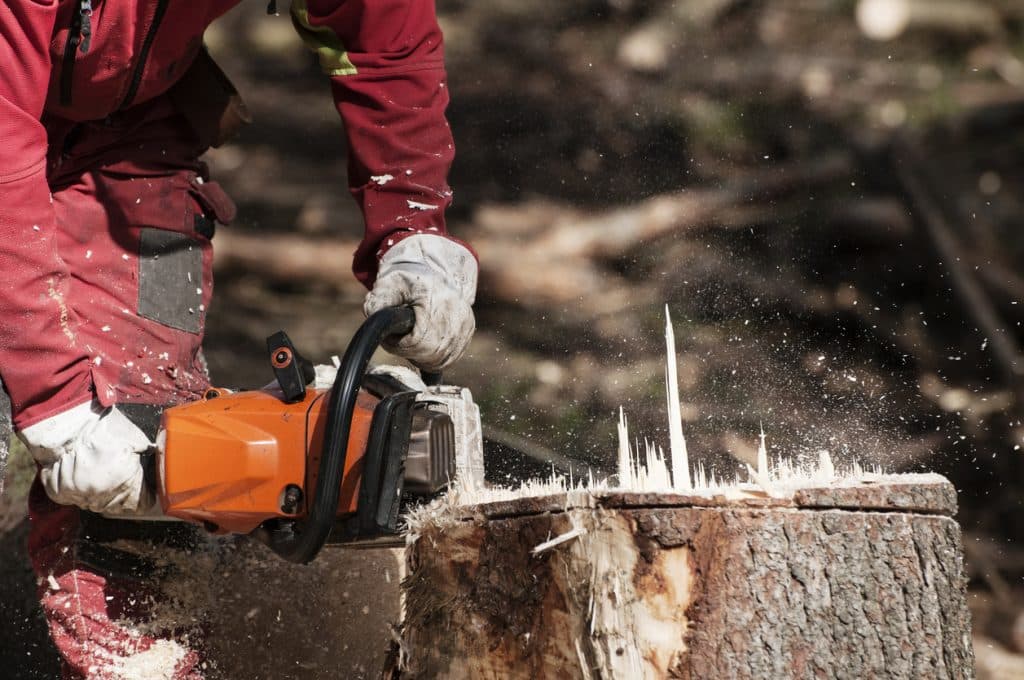
The height of your cut also makes a difference in safe tree removal. Your inclination may be to start cutting higher in the trunk. However, you won’t be able to control the chainsaw as easily if you hold it over the height of your shoulder. It’s best to cut at a height somewhere between your waist and your shoulders. If you have concerns or require tree removal services, contact Veteran Family Tree in Peoria, AZ.