

Lately has one of your trees not been looking as well as it should? Perhaps the leaves have taken on an unseemly color or you have seen some of the bark come off in patches. Before you know it, a pest or disease may be making itself at home.
Veteran Family Tree Service is veteran-owned and we have the ISA Certified Arborists to back us up. Since 2018 we have put our experience to work for the people of Peoria and other Arizona communities. You can reach us day or night at (602) 483-6197. When there is something amiss with a tree, it is best to get on it early.
A tree will not let you know it is having trouble but it does put out signals; too often a homeowner will overlook them until the point of no return. Here are the ones you should be on the lookout for.
Changes in the Leaves
Distress will usually show in the leaves first. In a healthy tree the foliage is full and of the proper hue for the season. But when there is an issue, the leaves make their feelings known.
What to watch for:
- Unseasonal yellowing or browning
- Any spots, blotches or odd discoloration
- Wilting and curling despite adequate water
- A thinning of the canopy where it was once full
- New growth that is stunted or deformed
- Leaves that fall well before they ought to
An odd leaf here and there is of no consequence, but if you see the pattern extend over a branch or the entire canopy, take a closer look.
Bark and Trunk Issues
Pests and diseases like to leave their mark on the bark, which is the tree’s armor. An inspection of the trunk will turn up what the leaves have not.
Signs include:
- Bark peeling or splitting in an irregular way
- Dark streaks or sap oozing from the wood
- Holes that could indicate boring insects
- The telltale sawdust at the base
- Wood that is spongy to the touch or sounds hollow
- Fungus, conks or mushrooms on the trunk
Pay particular heed to any fungal growth. It is a sure sign of decay you cannot see taking place within the tree.
The Branches
They have a story to tell. If an otherwise sound tree has dead limbs about it, the flow of its nutrients and water is being impeded.
You might notice:
- Limbs devoid of leaves in the growing season
- Brittle wood prone to snapping
- Abnormal or clustered growth
- Bark on the limbs that is discolored or peeling
- Deadwood on one side of the tree
Then there is the matter of safety. A limb that is weakened can give way without warning in an Arizona wind.
Evidence of Pests
Some insects are hard to miss while others prefer to stay hidden, leaving you to find the proof of their presence. They are a frequent culprit in the decline of a tree.
Clues that pests have made themselves comfortable:
- Insects in plain sight on the branches or bark
- Nests or webbing in the canopy
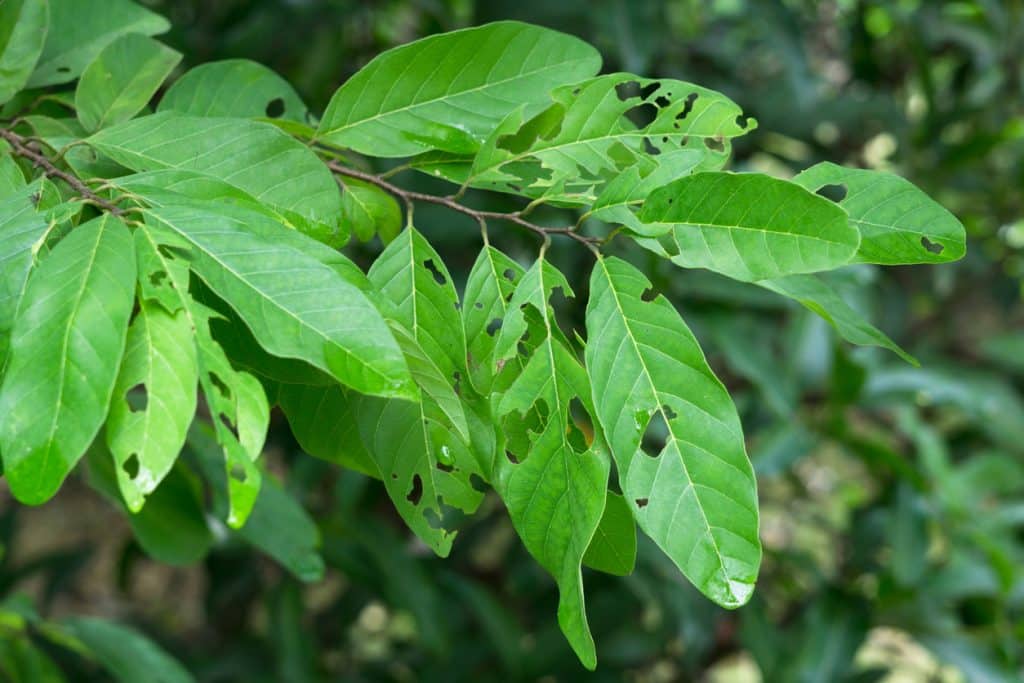
- Leaves that have been chewed or skeletonized
- Residue left on the ground or the leaves
- Fine dust from boring
- A good number of ants on the trunk
Do not be in the habit of letting an infestation run its course. Pests do not confine themselves and will move to adjacent trees if given the chance.
The Value of Early Intervention
Tree problems have a way of worsening in silence. What begins with a few spotted leaves can become a disease in the branches and put the whole tree at risk. Or a pest population will get so out of hand that the tree has to be removed.
We can put a stop to that. Our arborists are credentialed by the ISA and have more than ten years under their belt. We will assess the situation, get to the root of the cause and advise you on the way forward. Be it a health assessment, cabling and bracing, or simply trimming away the affected parts.
Our work conforms to ANSI Z133 standards and we cover all of Peoria, Glendale, Mesa and Phoenix as well as the rest of the Northwest Valley for both commercial and residential clients.
Should you have seen any of the above, do not put it off. Get in touch with Veteran Family Tree Service at (602) 483-6197 for same-day or emergency service. We are here 24/7 and as a veteran-owned firm we extend a 10% discount to our fellow veterans and those on active duty.